
Arrest Warrants in Cotton County
Cotton County arrest warrants begin with paperwork. Under 22 O.S. § 171, a verified complaint or information goes before a magistrate. That magistrate has to be satisfied on two points. First, an offense actually occurred. Second, reasonable ground exists to believe the defendant committed it. The arrest warrant that follows commands a peace officer to take the person into custody and bring them before the proper court. For Cotton County state criminal matters, the District Court of Cotton County and its Court Clerk are the court-file route. The sheriff, Walters Police, Temple Police, or another authorized officer may serve the process within the warrant's lawful scope, and the county posts no current countywide public arrest-warrant roster.
First question: Identify the issuing court and case number. Ask the Court Clerk about the public file, then ask the sheriff about service or surrender instructions.
The Cotton County Complaint and Magistrate Review
The Cotton County sequence is straightforward. A complainant, an officer, or a prosecutor prepares a sworn complaint or affidavit. That paper is presented to a magistrate, who weighs the alleged offense against the reasonable-ground standard. If the statutory test is met, the warrant issues, naming the court, the county, the person, the offense, and the command to peace officers. The Court Clerk then keeps the case and process records for public inquiry.
- A complaint or affidavit is prepared and verified under oath.
- A magistrate reviews whether an offense occurred and whether reasonable grounds connect the person to it.
- The warrant is issued with court, offense, and command information.
- The clerk records the case or process, subject to sealing and access limits.
- The sheriff or another authorized peace officer receives the service task.
The official Title 22 statutes provide the governing source.
What a Cotton County Arrest Warrant Contains
A Cotton County warrant can carry many fields: the court and county heading, the case or cause number, the offense and its classification, the issue date, the issuing magistrate, bond language, the arrest command, and the serving agency. Public case records may show some of these and withhold others. A missing field does not mean the paper is missing.
| Court and county | District Court of Cotton County or another issuing court shown on the process. |
|---|---|
| Cause number | A case identifier such as CF-YYYY-NNN, used here only as a format example. |
| Probable-cause basis | Verified complaint, affidavit, or charging instrument supporting magistrate review. |
| Offense | Charge, statute, and felony or misdemeanor classification where public. |
| Bond and hold | Bond amount, no-bond language, or a direction to ask the court. |
| Service event | Issued, served, returned, recalled, quashed, or another docket action. |
A blank Cotton County search result is not proof that no warrant exists. Only the issuing court can confirm one way or the other.
Separate Roles in Cotton County Arrests
Each Cotton County office does its own job. The Court Clerk keeps the District Court files and can explain public docket entries. The sheriff serves county process, runs the jail, and fields custody or surrender questions. Walters Police handles law enforcement inside Walters. Temple Police appears in the Oklahoma Chiefs directory. Recall or quash authority sits with the issuing court, never with the serving agency.
Cotton County Sheriff's Office
County service, jail, custody, and surrender routing
(580) 875-3383
How Cotton County Arrest Warrants Are Served
Who serves a Cotton County warrant depends on the command in the instrument and on agency jurisdiction. The sheriff is the county's law-enforcement, jail, and District Court process channel. Walters Police works matters inside Walters, while Temple Police is the city route for Temple. Other peace officers may serve under the warrant and Oklahoma process law. Confirm service status privately with the court or the agency involved.
For a public case, call the Court Clerk. For service, custody, or a surrender procedure, call the sheriff and ask what its office can confirm. The county posts no public warrant-unit schedule, booking schedule, bond window, or safe-surrender form, so a courthouse visit alone may not answer every operational question. Keep the court's role and the agencies' roles straight when you read a docket or plan your next call. That habit saves time and confusion in Cotton County.
Sealed Indictments and Cotton County Access
Some limits on access are built into the system. A sealed indictment or complaint keeps charging paper or a warrant-related filing off the ordinary public docket, and an active investigation can do the same. Juvenile records stay confidential unless a statute opens them. That is why a Cotton County name search can come back blank even when process exists.
Access rules: 51 O.S. § 24A.8 addresses law-enforcement records, § 24A.12 can protect active investigative material, § 24A.29 covers court protection orders, and 10A O.S. § 2-6-102 protects juvenile records.
Ask the Cotton County Court Clerk whether a public case record exists. Ask the clerk to state the legal basis for any redaction or denial. Skip the unofficial people-search pages.
Arrest Warrants, Summonses, and Bench Warrants
One case can spawn more than one kind of process. Arrest warrants, summonses, and bench warrants each carry a different court question and a different path to resolution in Cotton County.
| Process | Starting event | Local question |
|---|---|---|
| Arrest warrant | Verified complaint and magistrate probable-cause review. | What court issued it, what charge is shown, and what bond or surrender route applies? |
| Summons | Order to appear without the same arrest command. | What date and court must the person attend? |
| Bench warrant | Missed required appearance or court-compliance failure. | Can the issuing court reset, recall, quash, or set bond? |
A Cotton County city citation warrant is a municipal-court matter. It is not automatically a District Court arrest warrant.
Federal Warrants Are a Separate Cotton Layer
Cotton County sits in the Western District of Oklahoma. A federal warrant runs through the federal court, the U.S. Marshals, federal agents, or their lawful partners, never through an OSCN county search. PACER shows public federal docket entries, but it is a research tool, not a complete federal warrant list, and sealed matters stay hidden. The Lawton federal court office is listed at 410 SW 5th Street, phone (580) 355-6340, with weekday hours. The U.S. Marshals Western District materials carry separate federal contacts. Talk with federal counsel or a verified federal office about any suspected federal matter. The courthouse listing marks where the county system ends.
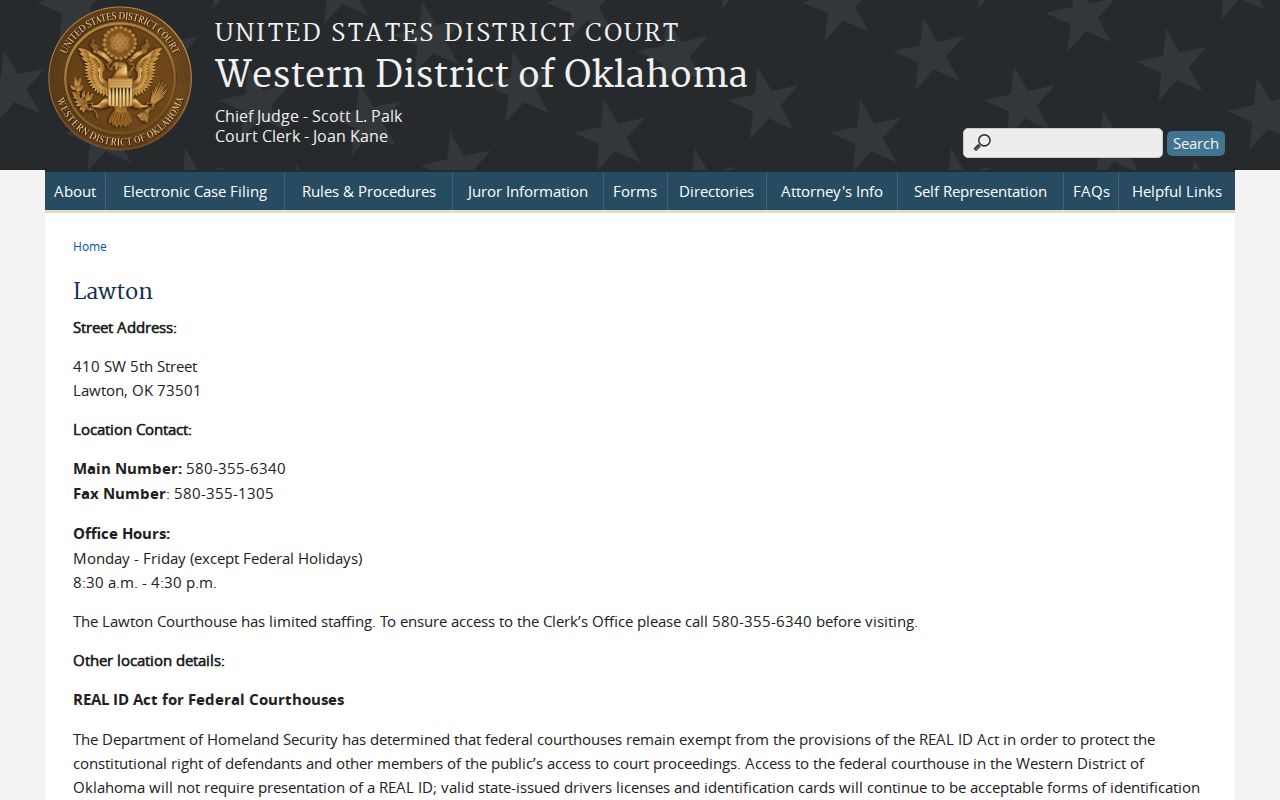
Do not use a county warrant page to infer federal status.
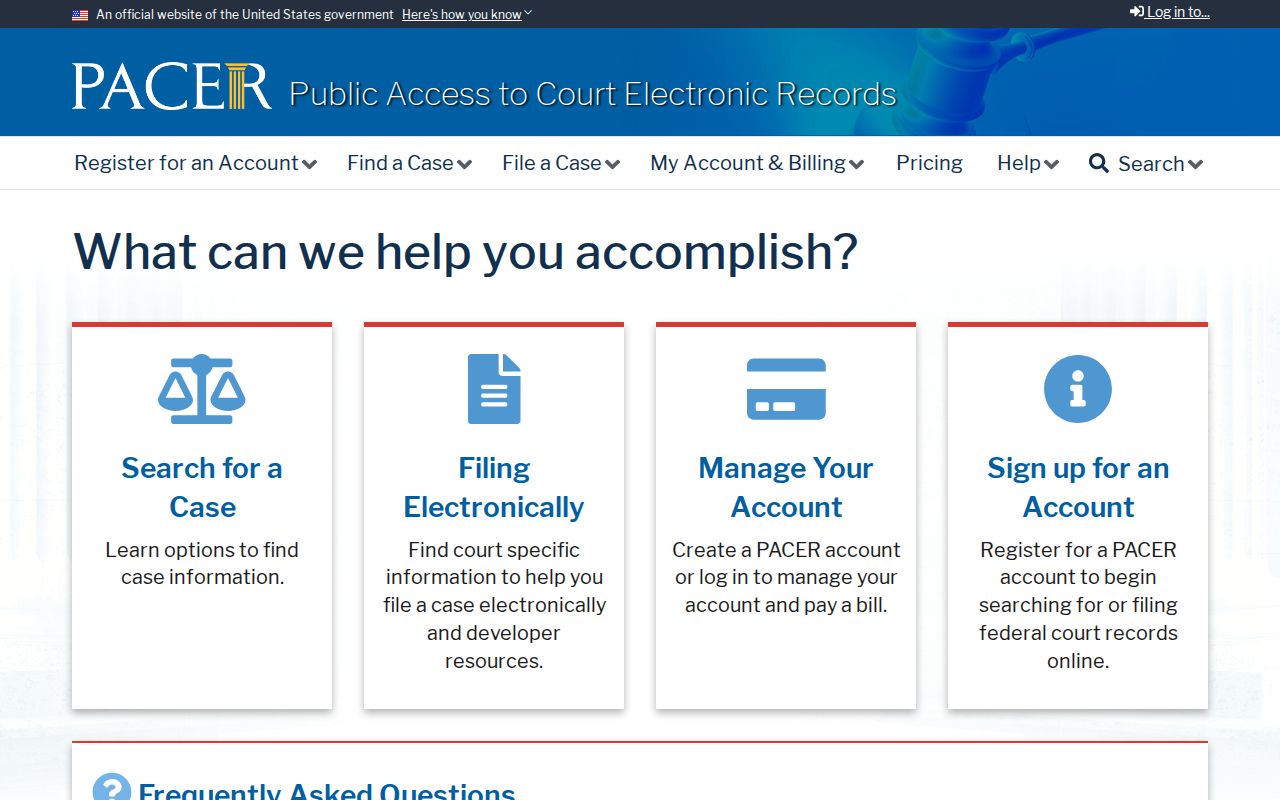
The PACER landing page identifies federal docket access as a separate research route.
What to Do If You Think You Have One
Call the Cotton County Court Clerk with your case number and ask whether a warrant-related event appears on the public docket. Call the sheriff at (580) 875-3383 for county service, custody, and surrender routing. Have a lawyer review the complaint, the bond, and any walk-through or recall option. A phone call cannot promise that no arrest will follow.
Use verified offices. Do not pay a caller who promises instant clearance, and do not assume a generic online payment receipt resolves a felony arrest warrant.
- Confirm the issuing court, case number, offense, and current bond question.
- Ask whether an attorney can arrange a lawful appearance or request recall.
- Ask the sheriff where and when a surrender is received if the court directs one.
- Keep all bond, docket, recall, and next-hearing documents.
Posting bond in Cotton County secures release. It does not dismiss the charge. Attend the next hearing and follow the court's order.
Booking, Magistrate, and Bond After Arrest
An arrest in Cotton County usually means booking at the jail, then a first appearance before a magistrate. Bond comes next. The amount hinges on the charge, any court order, and whether a hold or a non-bailable offense applies. Cotton County posts no booking schedule, bond schedule, payment list, or bond-window hours, so call the jail or the clerk to ask.
| Question | Office to ask |
|---|---|
| Current case and charging record | Cotton County Court Clerk or issuing court. |
| Custody and intake | Cotton County Sheriff's Office. |
| Bond amount and type | Issuing court, clerk, or counsel; do not infer it. |
| Federal hold or process | Federal court, U.S. Marshals, or federal counsel. |
Once released in Cotton County, confirm your next court date and keep working the underlying case. Clearing the warrant alone does not dismiss it.